
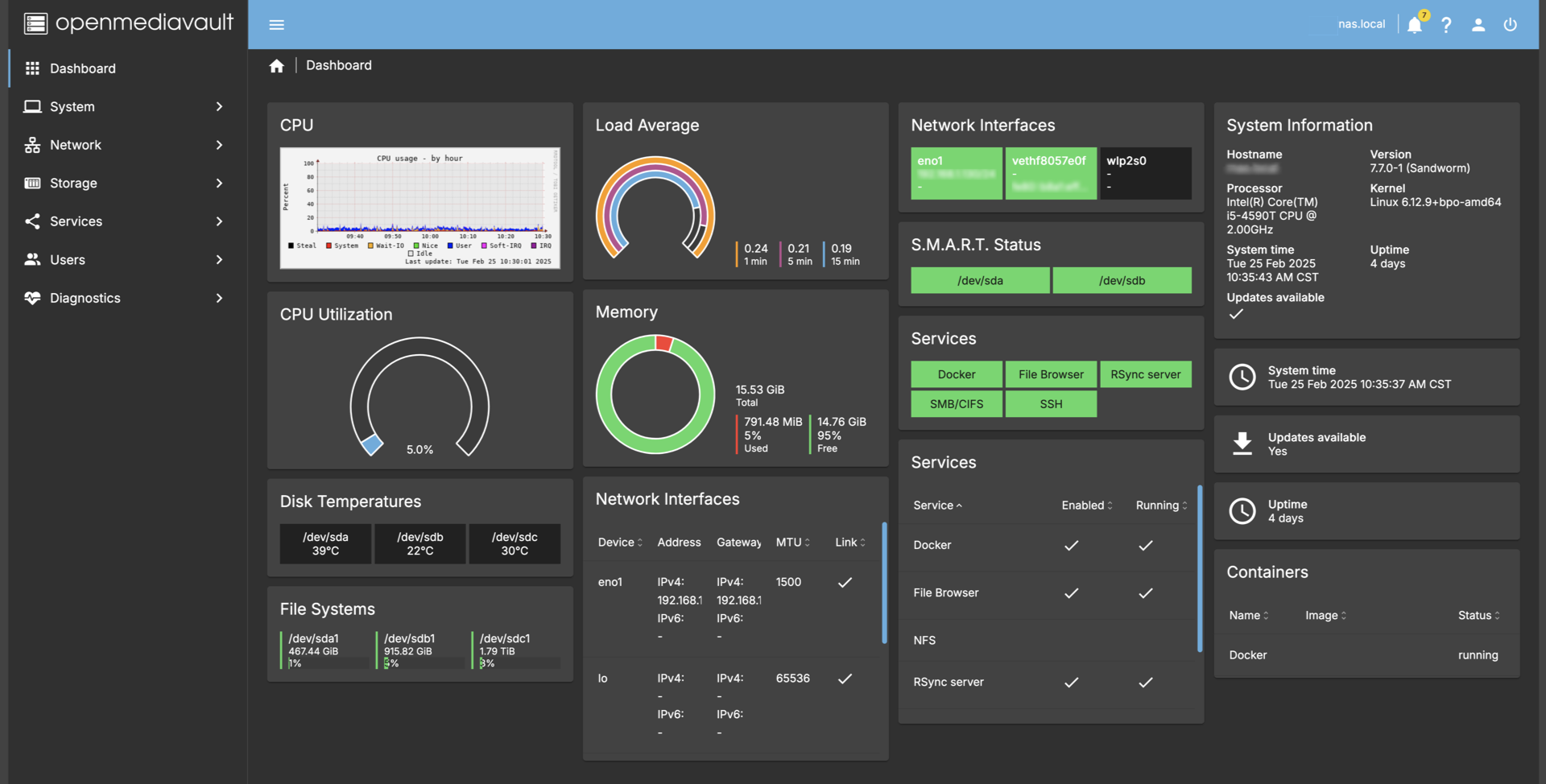
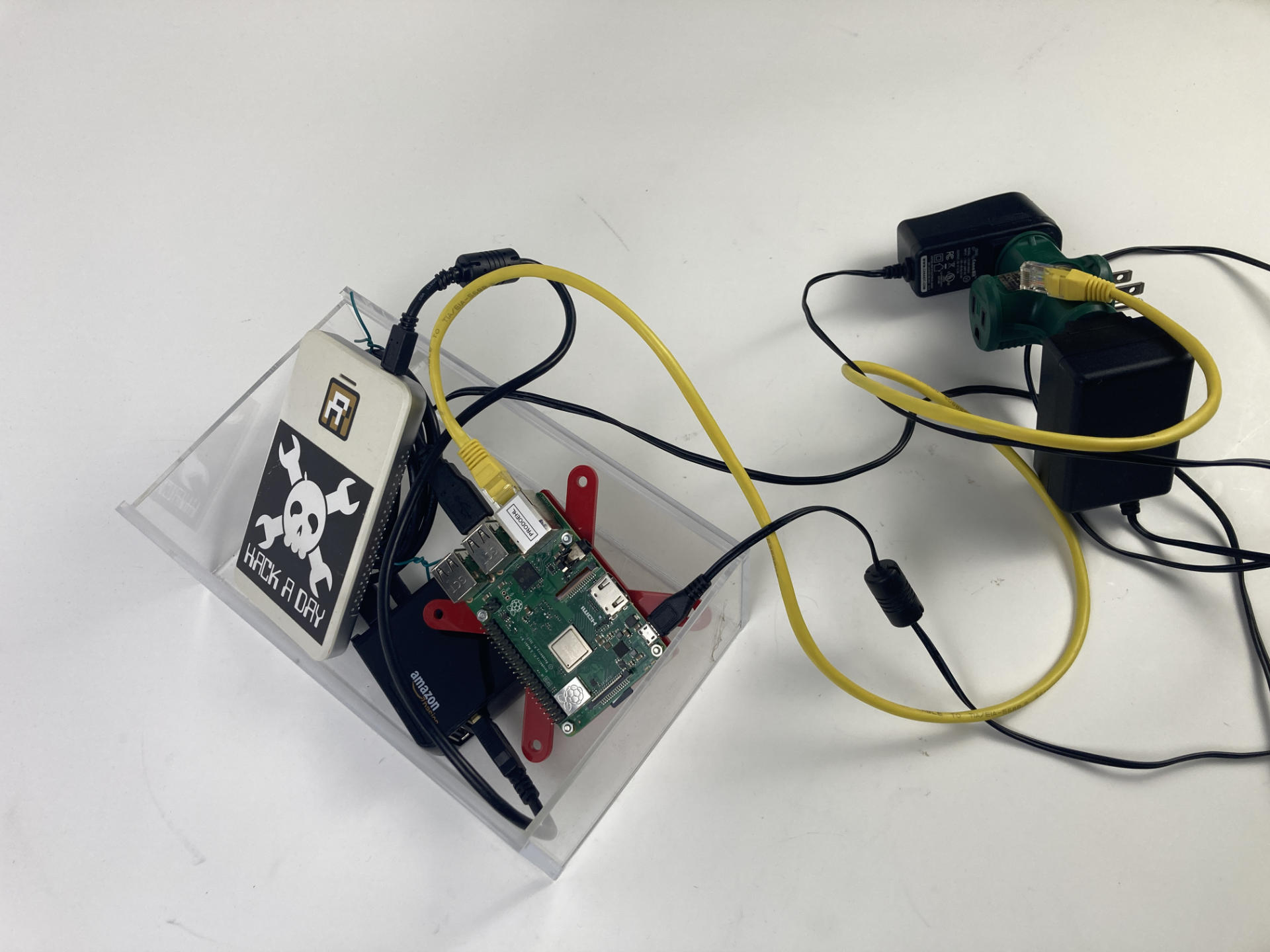
I’ve been meaning to play around with setting up NAS (Network Attached Storage) device for a while now, and I’ve got a lot of old Raspberry Pi computers around so… I got openmediavault running on a Raspberry Pi and connected an old USB hard drive to it. It worked pretty well! I was mostly testing things and didn’t really have this plan to move all of my files to it, which is good because I killed it. I mean, it died. The hard drive, not the Pi.
I had to connect the drive to the Pi using a USB hub so the drive would get enough power. I honestly grabbed some old random hard drive enclosure not realizing at the time the drive inside was at least a decade old. A friend of mine gave me a pile of drives a few years back that were retired from a recording studio. Anyway, the drive died, I got some good lessons in drive repair on Linux, and I moved on.
While the Raspberry Pi seemed to do quite well running openmediavault I also had an old Dell OptiPlex lying around so I decided to use a “real” computer so I could explore things like running containers and more heavy load stuff on the NAS.
Overall I’ve been mostly pleased with things. It’s been quite an improvement since I last ran a NAS on an NSLU2 long, long, ago.
Right now I’ve got a recent SSD drive that is not total garbage as the primary drive, and another old “junk” drive as a backup drive. I used the openmediavault rsync tasks feature to setup a nightly backup to the junk drive. I am sure that junk drive will die at some point but I’ve got a lead on some larger replacement drives from a friend. (Also on the cheap, because that’s obviously how I roll things.)
I’ve got a friend who is a huge fan of Synology and I do admit their stuff is really nice, especially the management interface. If I had unlimited funds I’d probably run out and buy a Synology device (or two) and call it a day… But then again there is a certain appeal to rolling your own solution and learning a lot in the process.

 We’ve also had some weird permission problems. We’re a Mac-shop, and most of the files don’t really rely on having their unixy-permissions correct, but some do, like the files that go onto the web sites. A file on my Mac set to -rw-r–r– gets copied to the NSLU2 and is then set to -rwx——. This is bad bad bad! If we try to upload files directly to a web site, or even to our Macs, and then to a web site, they can’t be viewed, as the permissions are hosed.


 Instead of the NSLU2, they could use an old PowerMac G4 that is on hand and not doing much. They could still plug in the external USB (and Firewire) drives, and keep them formatted as-is so they could be moved to another Mac if needed. Internal drives could also be used if desired. The pros of the G4 are that they already have it, it could use internal and external drives, and could be a more full-fledged server (print, http, etc.) The cons to the G4 is that management would not be as simple, and it’s more/bigger hardware with more/bigger failure points.
 For an off-site backup solution, I’m seriously looking at