Categories
Uncategorized

BarCampMilwaukee… Six!

BarCampMilwaukee5

Remember when you first heard about BarCamp? In case you forgot, the first BarCamp was held in Palo Alto, California, from August 19–21, 2005. Good old Wikipedia has a BarCamp page we’ve pointed many people to.

Back in 2005 I was pretty heads down and wasn’t really involved in Milwaukee’s technology or web communities. (I really don’t know what communities existed prior to 2006, so I’ll just say I wasn’t involved.)

Hypnotoad

So in 2006 I found myself in need of some networking, and community, and so on, and ended up going to the Milwaukee Web Design Meetup in May and June of 2006, and just after that, I wrote a blog post titled BarCampMilwaukee? Which, unless anyone wants to dispute, may have been the first seed of the tree that grew to be what we now know as the mighty oak that is… BarCampMilwaukee.

Lots of people helped along the way, including Justin Kruger, who ended up finding James Carlson and Bucketworks, which ended up being the venue for the first BarCampMilwaukee.

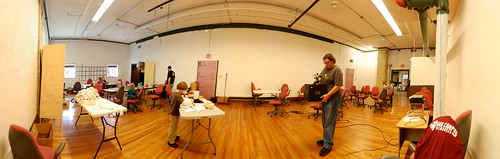
BarCampMilwaukee Introductions

Bucketworks also hosted the third and fifth BarCampMilwaukee, and for the second and forth, we were unable to use their building (moving, floods, occupancy issues, etc.) they got us venues to use. Bucketworks also acted as the fiscal sponsor for BarCampMilwaukee, allowing us to operate as a non-profit organization. In my opinion, Bucketworks (and their parent organization, The School Factory) have been more than just a venue over the years, they’ve been a great partner and a significant reason why BarCamp happens here in Milwaukee.

Bucketworks has had its share of ups and downs, and they ain’t perfect, and they don’t always get everything right, but for six years now, they’ve been a part of the BarCampMilwaukee experience. With BarCampMilwaukee6 coming up, it’s nice to know we have a solid venue with tables, chairs, an Internet connection, WiFi, a kitchen, lots and lots of space, and the things (and people!) we need to put on a user-generated conference.

BarCampMilwaukee2 Buttons

So, BarCampMilwaukee6? Yup, it’s happening October 1st-2nd, 2011 at Bucketworks in Milwaukee, Wisconsin. I just renewed barcampmilwaukee.org and at some point the updates will start flowing, and shirts will be made, and meals will be planned, and we’ll do it all again, for the sixth time.

I hope to see you there! :)

Update: I mentioned Justin above, but I also should have mentioned Bob Waldron! Take a look at his blog posts from July 2006 and you’ll see that he and Justin were sort of running parallel to my initiative, and once we found each other and joined forces, things started to happen. Thanks Bob!

Categories
Uncategorized

More fun with captchas

I’ve been known to deal with captchas over the years, but today while posting something on Facebook, I got one that made me pause…

captcha

Well that’s new! I’ve never had one with the text flipped upside down before… but in the world of captchas, there’s always room for improvement.

Being a smart-ass literal person, I headed over to fliptext.org to make sure I got it right. I mean, I didn’t want to just type in “they” right-side up, as that wouldn’t be correct. (Right?)

There we go… Confident I successfully entered the words in the captcha, I hit submit.

And it worked.

I wasn’t sure whether to be surprised or satisfied.

But I was left wondering if just typing in “they” right-side up would have worked.

Categories
Uncategorized

Vivitar 285

Vivitar 285

I recently got a Vivitar 285 flash.

Yeah, you could say I’m pretty excited about it. :)

Categories
Uncategorized

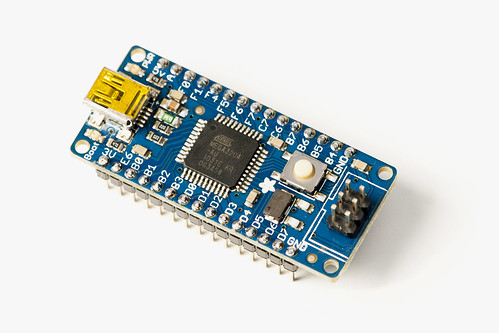
Getting Started with the Atmega32u4 Breakout Board+

Atmega32u4 Breakout Board+

I’ve talked about Adafruit’s Atmega32u4 Breakout Board+ before, first in my post Teensy vs. Atmega32u4 Breakout Board+ and then in the post The Future of Open Source (Part II), so I figured I should actually get a Atmega32u4 Breakout Board+. (Also, I’m just going to call it the Atmega32u4 from now on.)

Now as far as AVR development, I’m a guy who doesn’t like to stray too far from the Arduino world, partly because I find it fun and comfortable, and it does most of what I’ve needed so far. That said, I did end up dabbling with the Teensy for The Button.

Don’t get me wrong, the Teensy is awesome for what it does, and what it is, but occasionally my open source bias takes hold and it bothers me (just a little bit) that the Teensy is not open source. Of course, Adafruit’s Atmega32u4 is open source, which gives it a few more points in it’s favor. Price-wise, the Teensy is $16.00 and the Atmega32u4 is $20.00. Consider it the “open source tax” if you will. (Or buy 100 of them and they’re only $16.00 each then!) (Update: Actually, the Teensy with pins is $19.00 and the Atmega32u4 Breakout Board+ with pins is $20.00, which is even closer in price. You can buy the Teensy without pins at $16.00 but you can’t buy the Atmega32u4 Breakout Board+ without pins.)

So with an Atmega32u4 in hand, and from the perspective of someone who used a Teensy successfully, here’s my review.

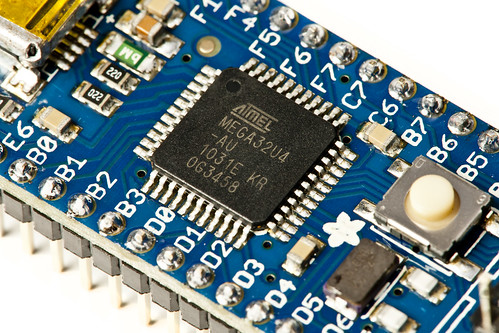
Atmega32u4 Breakout Board+ (Close-Up)

You’ll want to start with the Atmega32u4 product page. Without that, I’d still be watching a pulsating LED and swearing.

Read the section titled “Why not use a Teensy” and decide if you really want to use the Atmega32u4 instead. Done? Good. If you still want to use the Atmega32u4, continue reading!

The next section I’d call your attention to is the Using Teensyduino section. As I said, I’m an Arduino guy, so I wanted to give Teensyduino a try. Teensyduino is a software add-on for the Arduino IDE. It adds the ability to build and run sketches on the Teensy. If you don’t want to install avrdude or deal with command line stuff, this is another option. I’m not against using avrdude, but I wanted to try to parallel my Teensy experience, so Teensyduino was part of the toolchain.

I had already installed Teensyduino for use with the Teensy, so the section on that topic was where I jumped in. I walked through the changes, from editing boards.txt to restarting the Arduino IDE. It didn’t work.

But wait! There’s a line that says “Download the Arduino IDE from arduino.cc – as of this tutorial, IDE v21 works best – its not the latest one so scroll down to find it.” And yes, I’m running IDE v22. I’m not sure if that’s what broke things, but rather than download version v21 and try the edits again, I just grabbed the “ready to go” dmg that Adafruit supplied. Since I already had the Arduino IDE in my applications folder, I just renamed it to “ArduinoAtmega32u4” and ran it. It worked!

So the software installation/configuration part was a bit more difficult for the Atmega32u4 than for the Teensy, at first, but not much of an issue in the end.

Atmega32u4

So here’s a simple blink sketch, slightly modified from one that worked with the Teensy. The one issue with the Atmega32u4 is that you need to press the reset button on the board before you upload a sketch. Each time. Adafruit mentions this, so it’s not a surprise, but you just need to remember to do it. If you use a Teensy or an Arduino all the time, you might forget.

Atmega32u4

So the next test was to make the Atmega32u4 emulate a USB keyboard, just like the Teensy can do. You’ll need to change the menu options, but besides that, it worked well. At this point, with everything working, the differences between the Teensy and the Atmega32u4 seem pretty minimal. Granted, I’m not doing anything complex here, but it’s good to know that I could easily swap out the Teensy for the Atmega32u4 in some situations.

Here’s the code I used, which prints a space, similar to what the Teensy does for The Photo Booth:


void setup() {
  Serial.begin(9600);
  delay(4000);
}

void loop() {
  // Your computer will receive these characters from a USB keyboard.
  Keyboard.print(" "); 

  // typing too rapidly can overwhelm a PC
  delay(2000);
}

So now that I’ve got an Atmega32u4, and know what it can do, the only thing left is to let the hacking begin! :)

Categories
Uncategorized

Change and Reputation

Contemplating the Vortex

I keep hearing about how Facebook and Twitter are changing the way things are done. From drafting a constitution to fixing Summerfest, these “new” sites are making new things possible… sort of.

But really, this is nothing new as far as the web is concerned. A typical web site from 2002 could easily have solicited feedback on how to improve things within a country, or a festival, or your own home town. In fact, some did, but there were some crucial elements missing, including critical mass, and reputation.

Critical mass in that there’s more people online now, being more engaged, thanks to sites like Twitter and Facebook. For the typical non-nerdy type, Facebook is the simple way to be online and connect with friends, and family, and brands. Twitter is pretty similar nowadays, though maybe slight nerdier, and even that is debatable now.

When I talk about reputation, I’m talking about the fact that with Twitter, and Facebook, you very often have a well formulated idea of who someone is. It’s typically built by looking at what the person has to say, and to who, and who has things to say to them. Their reputation. Their identity.

In the olden days (1997-200?) reputation was often tied to your blog, where you did your talking and where people talked back to you. (I’m sure similar things could be said of forums, etc. but I’m not convinced it’s the same thing.) I know there have been anonymous bloggers, but if I look back at the people who were blogging at the same time I started, I knew those people, and I trusted those people. I read their blogs daily, and they read mine, and we commented on each others posts, and we had conversations. It may have been a fixed point in time which created this situation, and perhaps it is an illusion… I don’t know for sure.

But the point is, I think what Twitter, Facebook, LinkedIn, Quora, and other sites have going for them nowadays is this element of trust and reputation they give to the users. These elements (should) allow a conversation to happen without the doubt that can often exist online, where you don’t know if a dog is a dog or a guy pretending to be a dog.

I’m still thinking through this whole idea… but would love some feedback on it.